Posts

Showing posts with the label VMWare

VMWare Guests - The app window is blank white but the taskbar thumbnail is correct
Image
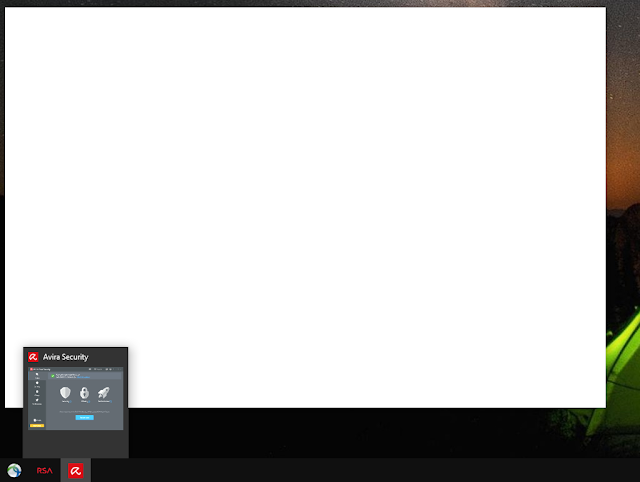
Ran into a situation recently in a Windows 10 Guest VM running in VMWare. The windows for a single program, Avira, were blank white. The weird part was that the taskbar thumbnail showed the window contents correctly. This felt like a driver error or mismatch. I have no idea which driver, host, or guest, caused the problem or when it occurred. Fix: Disable 3D Graphics Acceleration in the Guest The fix is pretty straightforward. My guest VM settings had "Accelerate 3D graphics" enabled.  Power down the Windows Guest VM. Pull up the VM settings Un-check Accelerate 3D graphcs Click OK Restart the Windows Guest VM
Building a development cloud using nested virtualization.

Image
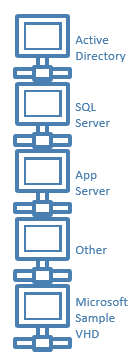
This article is not for you if you are happy developing/testing with at most two machines, your developer machine and a machine under test.  It is not for you if you do all your product evaluation, training and test can only be done in Azure or some other cloud environment that doesn't support nested virtualizaiton. This is really about building your own virtual labs or data centers to simulate larger installations or to use as training environments.  Microsoft applications or machine clusters often include Active Directory, a database and some application servers. You can some times install all this on single machines.  Multiple machines make sense if you are working on clustering or wish to leverage portions of your setup for future projects. Microsoft often provides VHDs for some of their more complicated products that save you configuration time. These machines are often more interesting when integrated into to some type of application including AD databases or...

Running the Microsoft ALM TFS 2013 (Hyper-V) Virtual Machine in VMWare without Persisting Changes

This blog describes how to run the Microsoft TFS/ALM Hyper-V virtual machine in one of the VMWare hypervisors (Player/Workstation/Fusion). You can use the same concepts for any other virtual machine/appliance. The 2013 RTM  ALM image comes with a set of TFS and Visual studio labs .  The virtual machine and the labs  have a couple expectations: It comes as a a Hyper-V VHD running an evaluation copy of Windows Server 2012. The work items and other information are "point in time" information.  This means sprint, iteration or other information can only be used in the labs if the VMs time is set to a specific date(s).  The machine resets the time to the same specific date and time on every reboot. This lets you re-run the exercises.  Pay attention to the places the way the time is set if you wish to use this process for Virtual Machines anchored at dates and times other than the ones used for the TFS 2013 RTM ALM image used in this post. The labs work bes...

Importing a bootcamp partition into VMWare Fusion when it has Hyper-V enabled.

Image
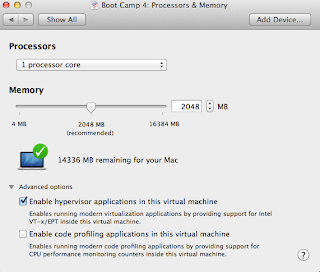
This is quick note on importing a Windows 8 or Server 2012 BootCamp partition that had Hyper-V hypervisor enabled. By default, you cannot have Hyper-V booted inside of Fusion because of hardware vitualization conflicts.  You know you have this problem if you see the following messages in the guest machine's window in VMWare Fusion. Your PC ran into a problem and needs to restart.  We're just collecting some error info, and then you can restart. (100% complete) If you'd like to know more, you can search online later for this error:  SYSTEM_THREAD_EXCEPTION_NOT_HANDLED (winhv.sys) Edit the Fusion VMX configuration file directly. You can fix this by editing the vmx file directly. Shutdown Fusion Find your Virtual Machine definition. Navigate to /users/<username>/Library/Application Support/VMWare Fusion/VirtualMachines/Boot Camp . Right Click on the Boot Camp package and select Show Package Contents Edit the file that ends in .vmx  using TextEdit o...

Subdomain DNS for VMWare/Hyper-V Virtual Lab on a MAC

Image
Scenario I have a Windows 7 VM that I do general development on in addition to writing Java or other code on my Mac.  Sometimes I want to push code from my Windows 7 VM to a virtual Windows Server Lab set of VMs.  Other times I want to write a program on the Mac that communicates with servers in my virtual lab.  Direct IP address connection is always possible across these machines butI want name based address resolution so that I can test software the same way it would be in our data center. The virtual lab is powered down most of the time so the DNS solution must work well for general internet traffic when that lab's DNS server is unavailable.   The virtual lab has its own AD server that registers all the Domain members host names and IP addresses. In my case, I have it act as a subdomain of a domain that I have. The subdomain DNS is visible to machines on that private network whether they are in the AD Domain or not. My Windows 7 development VM and my ...

Install a Microsoft Virtual Lab on a Mac with Fusion and Hyper-V

Image
Modified 2013/02/09 to add remote management enablement We're going create a Hyper-V Microsoft virtual lab environment on a Mac with the following configuration as discussed in this previous blog article  http://joe.blog.freemansoft.com/2013/01/run-microsoft-virtual-lab-on-mac-with.html .  We can use the same approach on Linux machine using VMWare workstation / player. Our mini-data center consists of 5 machines. A Windows 2012 Server hosting Active Directory and DNS.  The machine also holds/manages the hyper-v environment used to run the rest of the machines Two Windows 2012 servers to be used as application machines One Windows 2012 server used to run SQLServer 2012 One Windows 2012 server used to run the on-prem version of windows service bus We're not actually going to install any application software in this article.. The basic steps are Install Windows Server 2012 that will be our AD/DNS/Hyper-V host Hack the VMWare/Fusion/Workstation dhcp....

Virtual Machine Networking: NAT or Bridged?

VMWare and other desktop or embedded hypervisors create virtual networks that the virtual machines connect to when running on the hosting software.  These virtual networks provide network connectivity from the guest machines through the host machine out to the general LAN/WAN.  There are two main modes. NAT:   The host puts the virtual machines on their own private network and acts as a network gateway for that virtual network.  Guest machines can communicate over the shared network and communicate to the WAN/Internet through the host machine.  Guest machines consume none of the physical network's address space because they are connected on the hosts "virtual network". Guest network interfaces can be configured using DHCP, provided by the host, or with fixed IP addresses to simulate a stable server environment.  Fixed IP addresses are handy when the virtual machines need to communicate with each other. VMWare typically uses the host network's VMnet8...