No-meeting blocks - defending a policy that enables people to get stuff done
Meetings have their place, especially in collaborative, consensus, or creative organizations. We need to manage the number of meetings to ensure that you have "heads down" time. I have seen at least three different ways of tackling the problem.
- Create a corporate or department policy.
- Create a daily multi-hour team meeting.
- Block out multi-hour blocks on your calendar.
There are other ways that I've never tried.
- Ban all meetings
- Decline all meetings where you are optional.
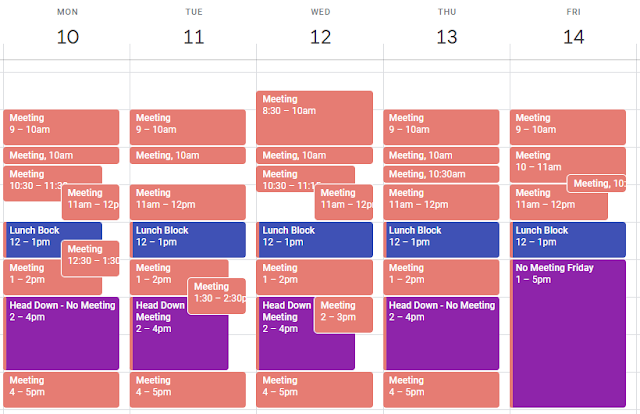
An average calendar with some protection
This calendar partially successfully guarded 4 ways. There is a "no meetings before 9:00" policy. There is a daily "lunch block ". There is a "no meetings Friday afternoon" policy and there is "team time" blocked out for two hours every afternoon.
Video
Video speaker notes
<to be added>
Create a corporate or departmental policy
Things like "no meetings before 9:00", "no meetings during lunch", "no meetings Fridays", "no meetings longer than 30 min".